
How to Tell If Your Furnace Needs Repair or Replacement
October 14, 2026 · Anderson Burner Heating & Cooling
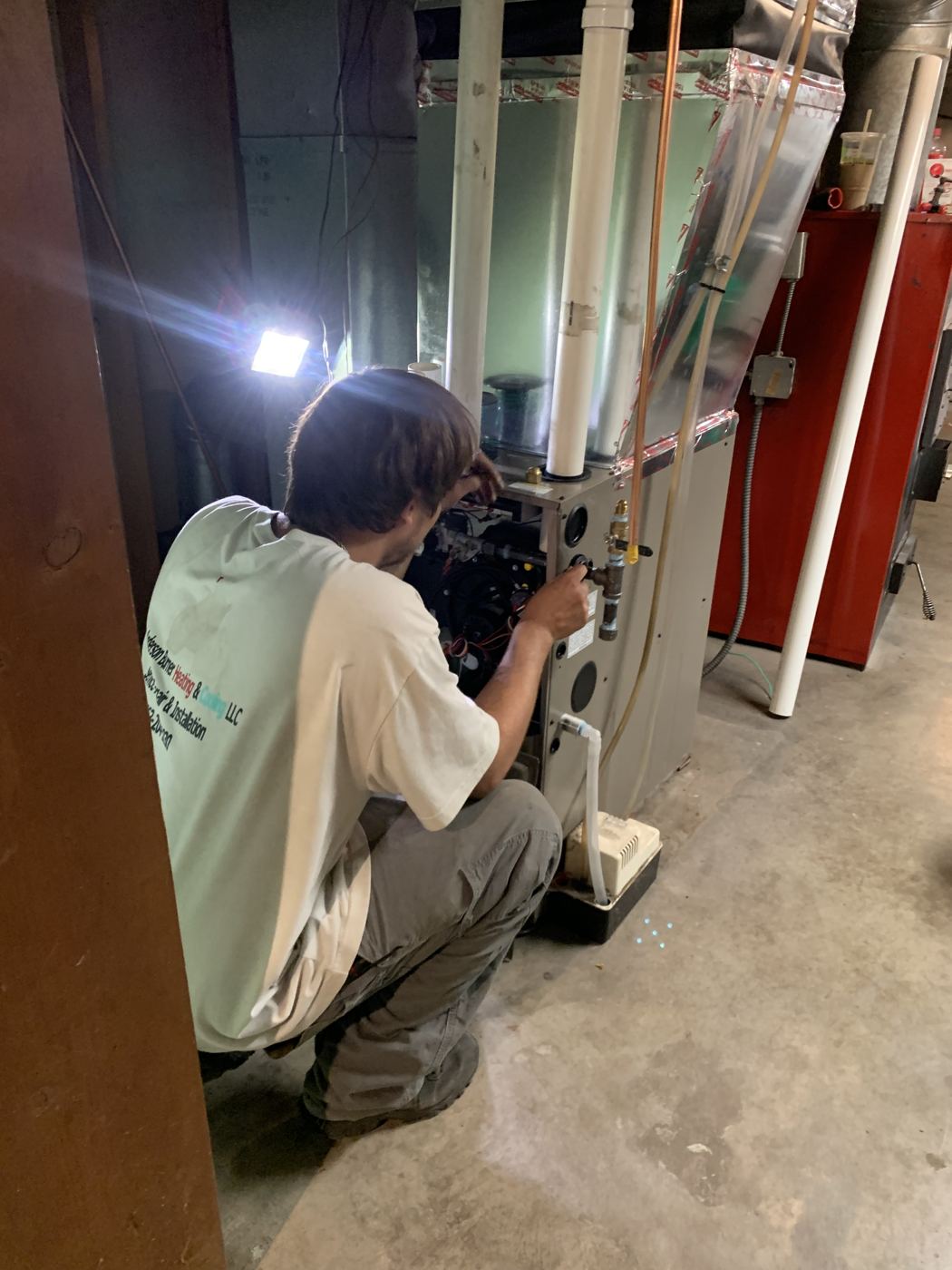
Almost every week someone calls us after another company told them their furnace is shot. Sometimes they're right. A lot of the time the furnace needed a part, not a new furnace. We're never paid on commission, so here's the honest version of how we decide.
Start with what actually failed
A furnace that won't light is a symptom. The cause could be a dirty flame sensor, a bad igniter, a failed inducer motor, a cracked heat exchanger or a control board. Some of those are a quick fix on the first visit. One of them is a real reason to replace. You can't make a good decision until somebody tests the system and tells you which one you've got.
That's why we test before we recommend anything. If a tech quotes a replacement without showing you what failed, ask. You should be able to see it or have it explained in plain language.
Signs a repair still makes sense
- The furnace is under roughly 15 years old and this is its first real problem.
- The failed part is a common wear item, like an igniter, flame sensor, pressure switch or capacitor.
- The heat exchanger checks out and the furnace is venting properly.
- Your heating bills haven't crept up much and the house heats evenly.
In those cases, fixing it is usually the smart money. A lot of the furnaces we see in East Bethel and around the North Metro have years left in them once the worn part is replaced.
Signs it's time to replace
- A cracked or failing heat exchanger. This is a safety issue because it can let combustion gases into your air, and it's the most common legitimate reason to replace.
- The furnace is pushing 20 years and the repairs are stacking up, one part after another.
- Rooms that never get comfortable, long run times, or bills that keep climbing even after service.
- The repair you're facing costs a big chunk of what a new furnace would, on a unit that's already near the end of its life.
Age alone isn't a death sentence. We've kept plenty of older furnaces running safely. But an old furnace plus a big repair plus a heat exchanger concern is usually where we'll recommend replacing it.
The questions we'd ask in your shoes
What exactly failed, and can you show me?
A good tech will point to the part or explain the test result. If the answer is vague, get another opinion.
What does the repair cost compared to a new furnace?
Get both numbers. We quote repair and replacement side by side so you're comparing real prices, not a repair price against a guess.
How long is this furnace likely to last after the repair?
Nobody can promise an exact number, but an honest tech can tell you if you're buying a few years or a few months.
What a repair visit looks like with us
When we come out, we start by asking what you've noticed: strange noises, short cycling, a smell, a room that never warms up. Then we test the furnace from the thermostat down to the burners and the venting. If there's a fault code, we read it. If a part is bad, we show it to you.
Our trucks carry the common parts, so if it's a repair, most of the time we fix it the same visit. If it's a replacement conversation, we lay out both prices before we leave, and you don't have to decide on the spot. Some of our best customers took a week to think about it and called back.
Small repairs that buy real time
Igniters, flame sensors, capacitors and pressure switches are inexpensive parts that wear out on every furnace eventually. Replacing one is routine and can keep a healthy furnace going for years. What we try to avoid is the opposite pattern: pouring money into a furnace with a failing heat exchanger, a tired blower motor and a cracked control board all at once. When the repairs start lining up like that, we'll tell you.
If you do replace, size it right
Bigger isn't better with furnaces. An oversized furnace heats the house in short bursts, cycles on and off constantly, wears itself out and leaves some rooms cold. We size the new furnace to your home, not just to the old unit's label, because the old one may have been the wrong size to begin with.
New installs come with a 2-year labor warranty, and if you have a written quote from another company for the same work, we'll match it. You can see a recent example on our high-efficiency furnace install page.
Get a second opinion before you sign
If you've been told to replace your furnace and something doesn't sit right, call us. We'll test it, tell you what we find, and quote both options. If replacement is the right call, we'll say so. If it only needs a part, we'll fix it and you keep your money. Learn more about our furnace repair and installation, or request a visit.
Frequently asked questions
How long does a furnace usually last in Minnesota?
A well-maintained gas furnace commonly lasts around 15 to 20 years. Annual tune-ups, clean filters and fixing small problems early all help it reach the long end of that range.
Is a cracked heat exchanger a reason to replace the furnace?
In most cases, yes. A cracked heat exchanger can let combustion gases mix with the air in your home, so it's a safety issue, and on most furnaces replacing the whole unit makes more sense than replacing the exchanger.
Can you give a second opinion on a furnace replacement quote in East Bethel?
Yes. Anderson Burner is based in East Bethel and gives second opinions across the North Metro. We test the furnace, explain what failed, and quote repair and replacement side by side.
How soon can you come out to look at my furnace?
We aim for appointments within 24 to 48 hours, and same day when we can. If you have no heat, call instead of filling out a form, and after-hours emergency service is available.
Do you offer financing on a new furnace?
Yes, financing is available. We also offer 10% off for seniors and military and match competitors' written quotes.