
What an Annual Fuel Oil Burner Service Should Include
September 23, 2026 · Anderson Burner Heating & Cooling
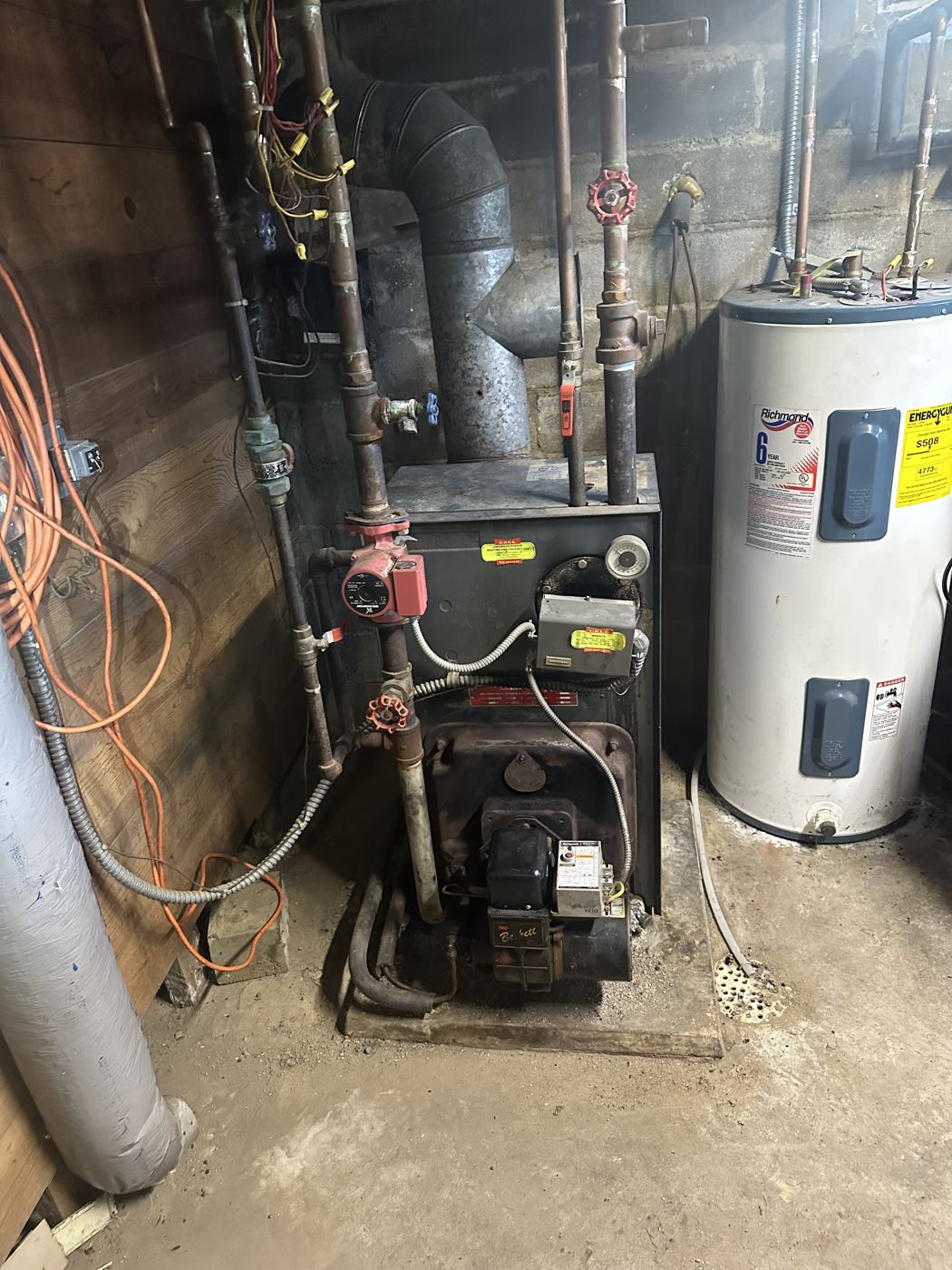
Fuel oil heat has a reputation for being old-fashioned. We see it differently. Plenty of our customers have had oil furnaces and boilers running for decades, and the ones that last are the ones that get serviced every year. Oil burns dirtier than natural gas, so skipping a year shows up fast in soot, efficiency and breakdowns.
The trouble is that fewer techs work on oil equipment anymore. If you've had a hard time finding someone who knows oil heat, here's what a proper annual service should cover, so you know what to expect.
A full service usually takes a couple of hours, depending on how much soot has built up and whether the system is a furnace or a boiler. Plan on the heat being off for part of that time, which is one more reason to do it before the weather turns cold.
Replacing the wear parts
A few parts are meant to be replaced every year, not just looked at.
- The nozzle. It sprays the oil into a fine mist so it burns cleanly. A worn nozzle sprays unevenly, wastes fuel and makes soot.
- The oil filter. It catches sludge and debris from the tank before it reaches the burner. A clogged filter is a common cause of no-heat calls.
- The pump strainer, where the burner has one, gets cleaned or replaced as well.
Cleaning out the soot
Even a well-tuned oil burner leaves some soot behind. Over a season it builds up on the heat exchanger and in the flue passages, and soot works like insulation. It keeps heat from getting into your home and sends more of it up the chimney. A real service cleans the heat exchanger surfaces and the flue pipe so the heat goes where you paid for it to go.
Checking the burner and the flame
We check the electrodes and their spacing, the ignition, and the burner's air settings. Then we run the burner and look at the flame and the combustion. On oil equipment, a combustion test is how you know the burner is set up to burn efficiently and cleanly, instead of guessing by eye.
Safety checks
- The flue and chimney connection, to make sure exhaust has a clear path out.
- The barometric damper, which keeps the draft steady.
- The safety controls that shut the burner down if it fails to light.
- A look at the oil tank and lines for leaks, weeping fittings or corrosion.
For boilers, we also check the pressure, the relief valve and the circulator so heat actually reaches the radiators or baseboard.
Signs your oil system needs attention now
- Black soot around the burner, the flue pipe or the barometric damper.
- An oil or exhaust smell in the basement.
- Rumbling or puffing when the burner starts.
- The burner locking out and needing a reset.
- Higher oil use than last winter with no change in the weather or the thermostat.
Any of these means the burner is probably out of adjustment or overdue for a cleaning. Puffback, where the burner lights with a small explosion of soot, can coat a room in black dust, so it's worth fixing sooner than later.
What we won't do
We won't use an annual service visit as a sales pitch. If your oil furnace or boiler is in good shape, we'll clean it, tune it and tell you it's in good shape. If something needs attention, we'll show you and quote it before we touch it.
When to schedule it
Late summer or early fall is ideal, before the first cold night. That way any problems turn up on a nice day instead of at 2 in the morning in January. If your system has been running rough, sooting up or smelling like oil, don't wait for fall. Call now.
Keep it, fix it or replace it?
An annual service is also a good time to talk about the future. Some older oil systems are worth keeping for years. Others are near the end, and it may be time to look at replacing the boiler or furnace, or at adding a heat pump to cut how much oil you burn. We'll give you a straight answer either way.
You can see an example on our oil-fired boiler service page, read more about our fuel oil heating service, or check whether we cover your town, like Anoka or Princeton.
Frequently asked questions
How often should an oil burner be serviced?
Once a year. Oil burns dirtier than natural gas, so an annual cleaning and tune-up keeps the system efficient and catches problems before winter.
What happens if I skip my oil burner service?
Soot builds up, efficiency drops, and the filter and nozzle wear out, which makes no-heat calls and sooting more likely during the coldest weeks.
Do you service fuel oil furnaces and boilers in the North Metro?
Yes. Anderson Burner services oil burners, oil furnaces and oil-fired boilers across East Bethel, Anoka and Isanti counties and the surrounding North Metro.
When is the best time to schedule oil heat service?
Late summer or early fall, before heating season starts. If your system is already running rough, schedule it right away.
Should I replace my old oil boiler?
Not automatically. If it's in good shape and serviced every year, it may have plenty of life left. We'll test it and give you an honest read on repair, replacement or adding a heat pump.